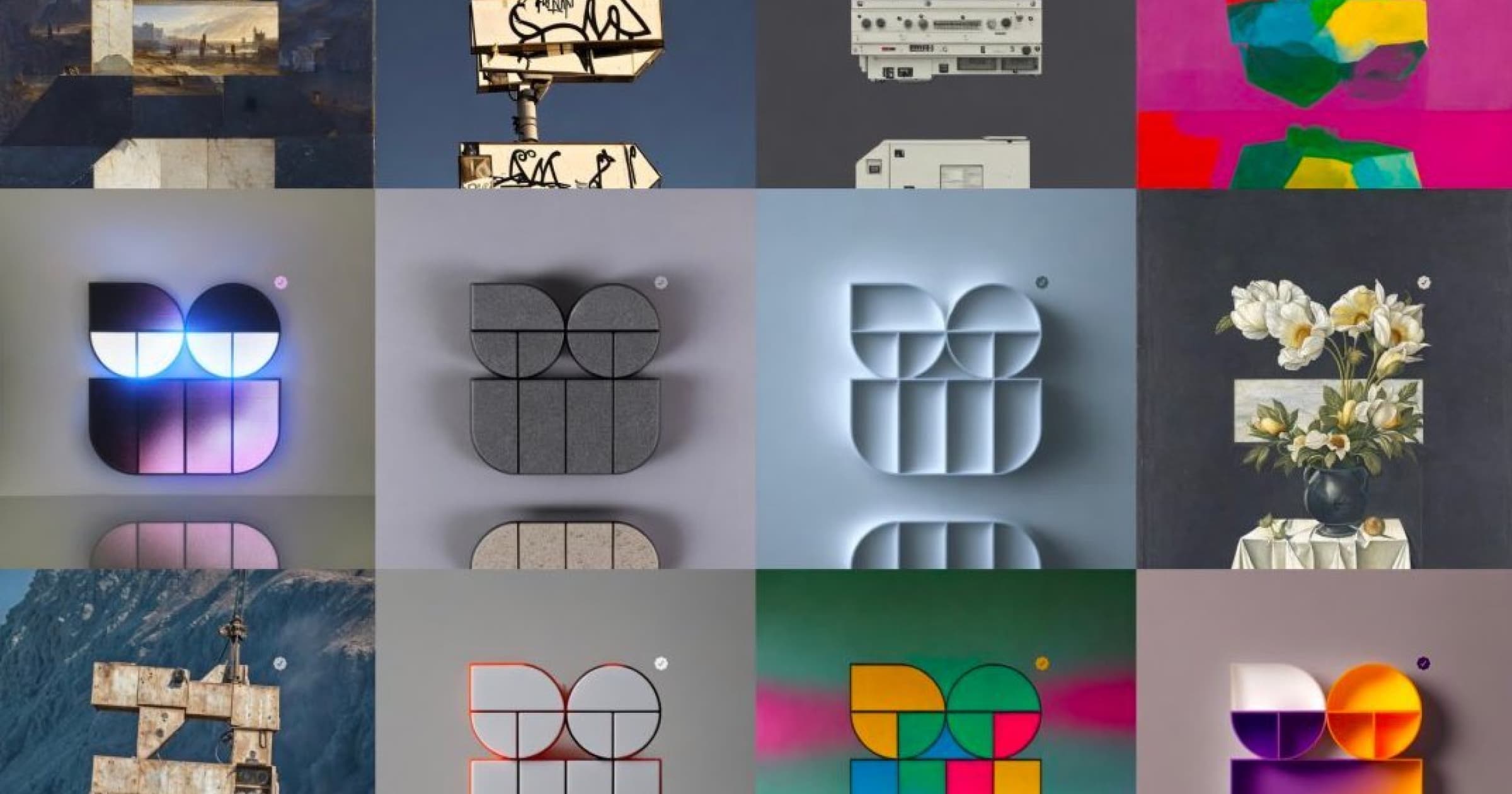
Opepen began on 8 January 2023 as a geometric image related to Pepe the Frog. Its 16,000 tokens became a framework for releasing work by different artists, with collectors choosing which proposed sets they want their tokens to join.
An image that others can use
The documented references are specific: Pepe’s circulation as an internet meme and the geometric work of the artist batz. Greg Larson’s guide reproduces Butcher’s 8 January 2023 acknowledgment of batz and the Scapes banner project. This is evidence of a stated reference, unlike the historical comparisons in this site’s context essay.
The internet supplies both the image’s cultural vocabulary and the means for artists and collectors to act together. Authorship operates at several levels: the initial form, the release system and the artworks proposed for individual sets.
Sources: nft now, 17 November 2023
Choosing a set
The 2023 system organized releases in sets of 80. Holders signed messages to opt into previews they wanted. A set needed demand at twice its available supply before release; selection was random, so opting in did not guarantee an allocation. These are the rules described in the dated 2023 account, not a promise about every subsequent release.
The meaningful choice is a commitment to an image, rather than a vote on an abstract proposal. A collector can wait for another set. Artists supply the images; the release process and participating holders determine which tokens receive them. “Consensus” here names a defined threshold among eligible holders, not agreement by an unrestricted public.
Sources: nft now, 17 November 2023
Later changes and proposals
In a 21 February 2023 post, Butcher describes the first image as an unplanned release inspired by batz’s geometric Pepe work, and credits Matt Furie as the underlying reference. The later protocol should not be read as a fully formed plan present at that first release.
On 21 March 2024, he announces a change limiting each token to opting into one set at a time, citing distortion of the preference signal. A February 2025 post proposes releasing individual edition tiers; a November sketch proposes bringing more of the interface into the token view. These later two records are proposals, not evidence that those changes were deployed.
Sources: X / archived on jack.art, 21 February 2023; X / archived on jack.art, 21 March 2024
Following a work through the record
Set 001, 8x8, offers a concrete example. Its page identifies Jack Butcher as creator, records submission on 30 April 2023 and consensus on 3 May, and lists six edition sizes: 1, 4, 5, 10, 20 and 40, totaling 80 tokens. It links the images to a reveal mechanism, an Ethereum block and a set signature.
The current project site separates submissions, artists and the permanent collection. These records make the collaboration inspectable: a researcher can identify a particular set and its contributors rather than treating every Opepen image as authored by Butcher alone.
Sources: Set 001 — 8x8; Opepen Edition — Project and permanent collection
Participation and authorship
Opepen offers a different kind of agency from Checks. In Checks, combining reduces the surviving supply. In Opepen’s set system, a holder expresses a preference about what an existing token will become. The allocation mechanism limits that choice.
Editorially, this makes the distribution of images part of the work. It also leaves a tension: participation depends on access to tokens, and proposing an image is different from controlling its eventual reception.
Development
Opepen launches as a 60-minute open edition. Source
Butcher describes sets of 80 and the opt-in threshold in a post reproduced in the later guide. Source
Set 001, 8x8, records consensus. The set page preserves links to its reveal mechanism and blockchain record. Source
The artist announces a one-set-at-a-time opt-in change. Source
Images
Selected images from the artist’s project archive. Captions describe the images; they do not assign unverified photography credits.


Sources and further reading
Artist statements describe intention. Reporting and interviews record different perspectives; exhibition announcements establish specific presentations. How sources are classified.
Artist / studio · Selected posts from the downloaded account archive
Opepen: the initial image and an unplanned continuation
1 selected posts. A February 2023 account names the geometric Pepe reference and describes the lack of an initial development plan. Original wording and links are preserved; headings and notes are editorial. This is artist testimony, not independent verification.
Artist / studio · Selected posts from the downloaded account archive
Opepen: changes, proposals and interface sketches
3 selected posts, through 2025-11-02. Dated statements distinguish an announced opt-in change from later proposals about releases and the token’s interface. Original wording and links are preserved; headings and notes are editorial. This is artist testimony, not independent verification.
Artist / studio · Project documentation
Opepen Edition — Project and permanent collection
The live project describes public submissions and a collection of 200 final sets. Dynamic counts are not reproduced as permanent facts here.
Artist / studio · Set record
Set 001 — 8x8
Records submission on 30 April 2023, consensus on 3 May 2023, six edition tiers, and links to the reveal mechanism, block and set signature.
Independent publication · Reported guide
A Guide to Opepen: Jack Butcher’s Pepe-Themed Web3 Experiment
Describes the January launch and 2023 opt-in system; reproduces dated artist posts. The release rules are a historical account, not a guarantee of current platform settings.
Gallery / platform · Published panel recording
Digital Art Alpha With Jack Butcher, Christie’s & 6529 Capital
A Christie’s-hosted discussion at Gateway Miami. Date is publication of the recording, not the panel date. Includes artist and market-participant perspectives.